Print & Finishing
Puff Print vs Screen Print vs Embroidery vs DTG: Which Should Your Brand Use?
The decoration method changes everything about a piece: how it looks on camera, how it feels in hand, how long it lasts and what it costs. Here's how the main streetwear techniques compare, and when to use each.
Quick comparison
| Method | Look & feel | Best for | Watch out for |
|---|---|---|---|
| Screen print | Bold, opaque, slightly raised ink layer | Large graphics, bulk runs, solid colours | Each colour needs its own screen, so many-colour designs add setup cost |
| Puff print | Raised, 3D, soft and spongy | Logos, wordmarks, statement graphics | Fine details and very small text can lose definition |
| Embroidery | Stitched thread, textured and premium | Chest logos, small marks, caps, minimal designs | Large solid areas get heavy and stiff |
| DTG | Printed into the fabric, soft, full colour | Photographic or many-colour art, very small runs | Less vibrant on dark garments; can fade faster than screen print |
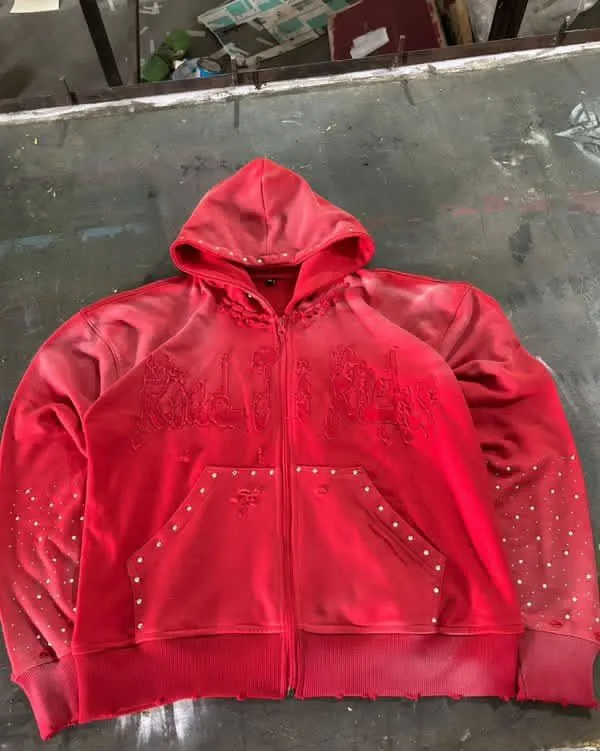
| Rhinestones | Sparkle, high impact | Statement hoodies, zip-ups, accent details | Needs correct application and care to last |
Screen printing
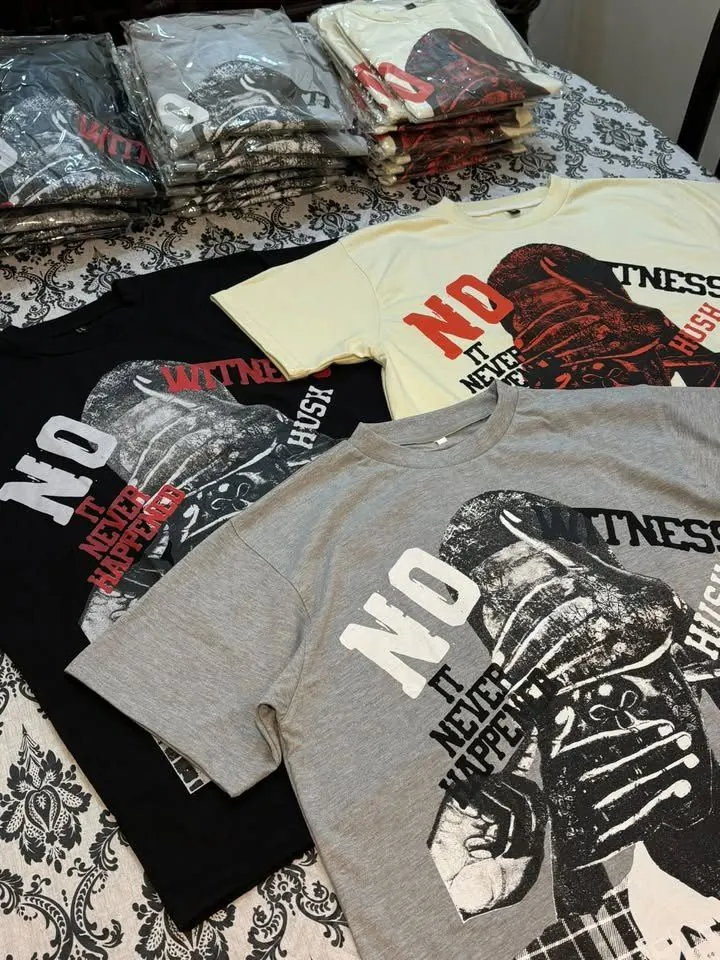
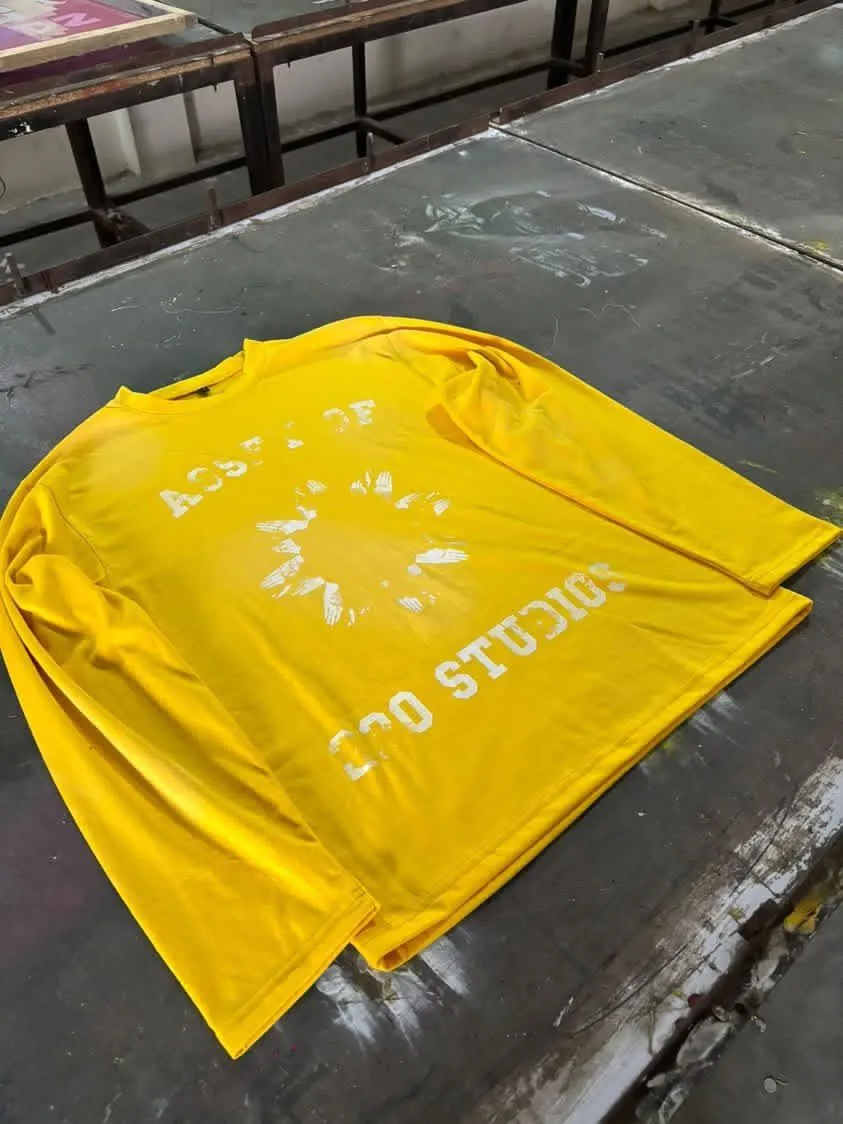
Screen printing pushes ink through a mesh screen onto the garment, one colour at a time. It's the workhorse of streetwear: vibrant on both light and dark fabrics, durable through many washes, and cost-effective once screens are made. Plastisol inks sit on top of the fabric and give that classic bold finish; water-based inks soak in for a softer feel.
Use it for: big front and back graphics, arc prints, oversized tees, and anything you'll reorder.
Puff print
Puff print uses an additive in the ink that expands under heat, so the print rises off the fabric. It gives a tactile, vintage-inspired 3D effect that looks great on camera and in hand. Puff works best with bold shapes and thick lettering.
Use it for: wordmarks across the chest, collegiate-style lettering, and graphics you want people to touch. It also pairs well with flat screen print in the same design for contrast.
Embroidery
Embroidery stitches your design directly into the fabric with thread. It reads as premium and lasts as long as the garment. Flat embroidery suits small, clean logos; 3D puff embroidery (stitched over foam) adds height, especially on caps. Chenille gives a fuzzy, varsity look.
Use it for: minimal chest logos, sleeve hits, and elevated basics. Keep large solid areas to a minimum on lightweight tees so the fabric doesn't pucker.
DTG (direct-to-garment)
DTG works like an inkjet printer for clothing. It handles unlimited colours and fine detail with no screens, so setup is minimal. The trade-off is that colours can look less punchy than screen print, especially on dark garments, and durability depends heavily on pre-treatment and curing.
Use it for: detailed, photographic artwork, testing designs, or very small quantities.
Rhinestones and beading
Rhinestones and beadwork add instant visual impact and are a signature of a lot of current streetwear, from spider-web hoodies to studded zip-ups. Placement and density matter: strategic rhinestone accents often look more premium than covering an entire panel.
Use it for: statement pieces, limited drops, and layering on top of puff or screen prints.
Combining techniques
Some of the strongest streetwear pieces mix methods: a puff print logo with rhinestone outlines, a screen-printed back graphic with a small embroidered chest hit, or prints applied over acid-washed fabric. If you're combining techniques, note the order of operations and placement clearly in your tech pack.
How to choose
- Big, bold, repeatable graphic? Screen print.
- Logo you want to feel premium and textured? Puff print or embroidery.
- Full-colour artwork in small numbers? DTG.
- Statement piece for a limited drop? Rhinestones or mixed techniques.
Not sure which method suits your design?
We run screen print, puff print, embroidery, rhinestone and beading, and washes in-house. Send us your artwork and we'll recommend the right technique for the look and budget you want.
Frequently asked questions
What is the difference between puff print and screen print?
Both use screens, but puff print ink contains an additive that expands when heated, so the print rises off the fabric into a soft 3D finish. Standard screen print stays flat.
Is embroidery or screen printing better for hoodies?
Screen printing is better for large graphics and bold colours. Embroidery is better for smaller logos and a premium, textured look. Many brands use both on the same hoodie.
Does puff print last?
Puff print is durable when it's cured properly and washed inside-out in cold water. Very thin lines and tiny text are the parts most likely to wear first.
Is DTG good for streetwear?
DTG is good for detailed, full-colour artwork and very small runs. For bold, high-contrast streetwear graphics on dark garments, screen print usually looks more vibrant and lasts longer.